 Hollis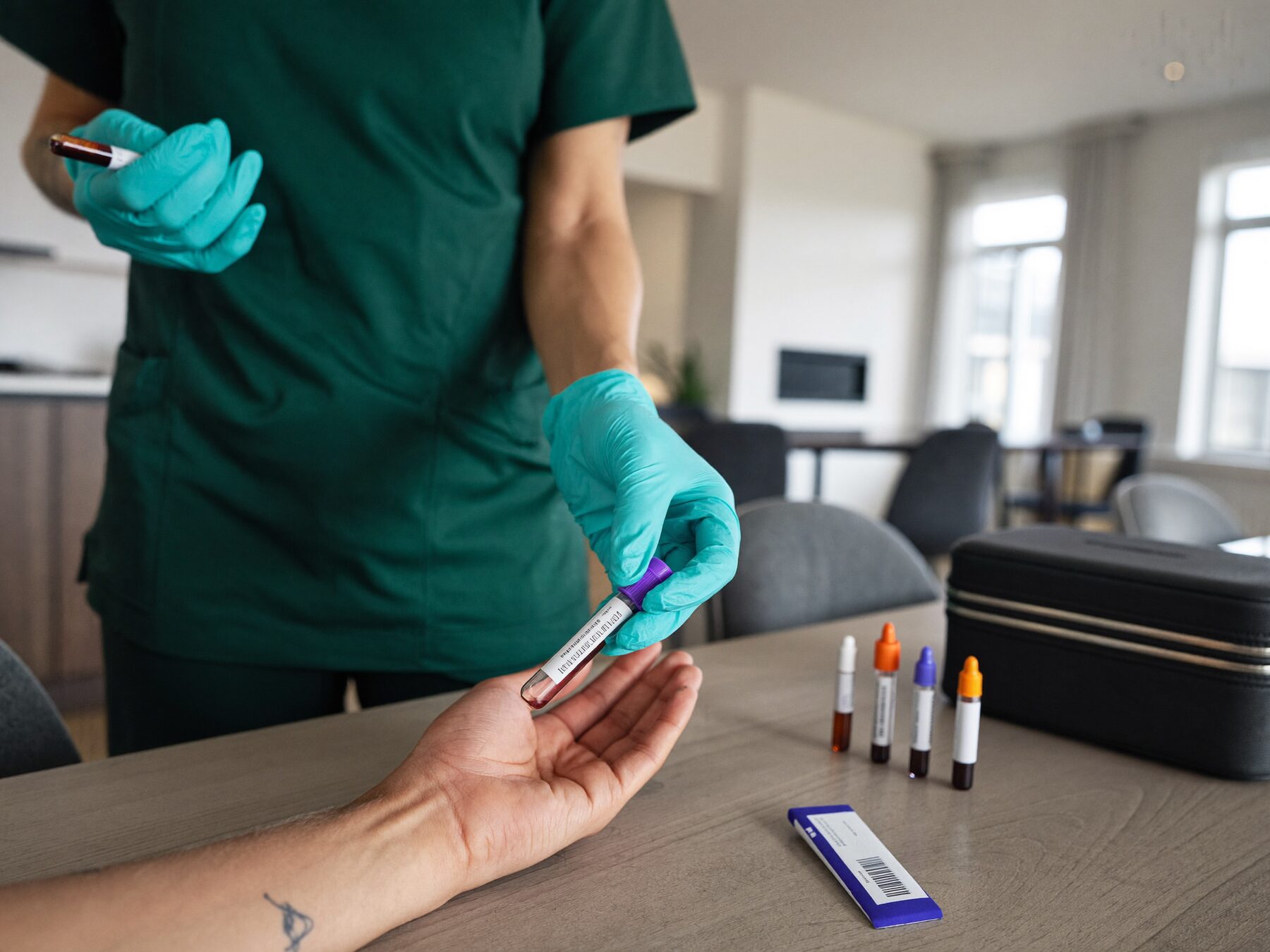

Symptoms
Many people have no symptoms. When they do appear, they can include pain when passing urine, unusual discharge, bleeding between periods or after sex, pelvic pain, or testicular pain. Chlamydia in the throat or rectum usually causes no symptoms.
Testing
The test is a urine sample or a swab, and can detect chlamydia from about 2 weeks after sex. We include throat and rectal swabs where relevant, because a urine test alone can miss infections there.
Treatment
Chlamydia is treated with a short course of antibiotics prescribed by your physician. Avoid sex until you and any partners have finished treatment, and follow your physician's advice on retesting.
This guide is general information, not a diagnosis. Every situation is different, so speak to a physician about yours. If you are in immediate danger, call 999.