 Hollis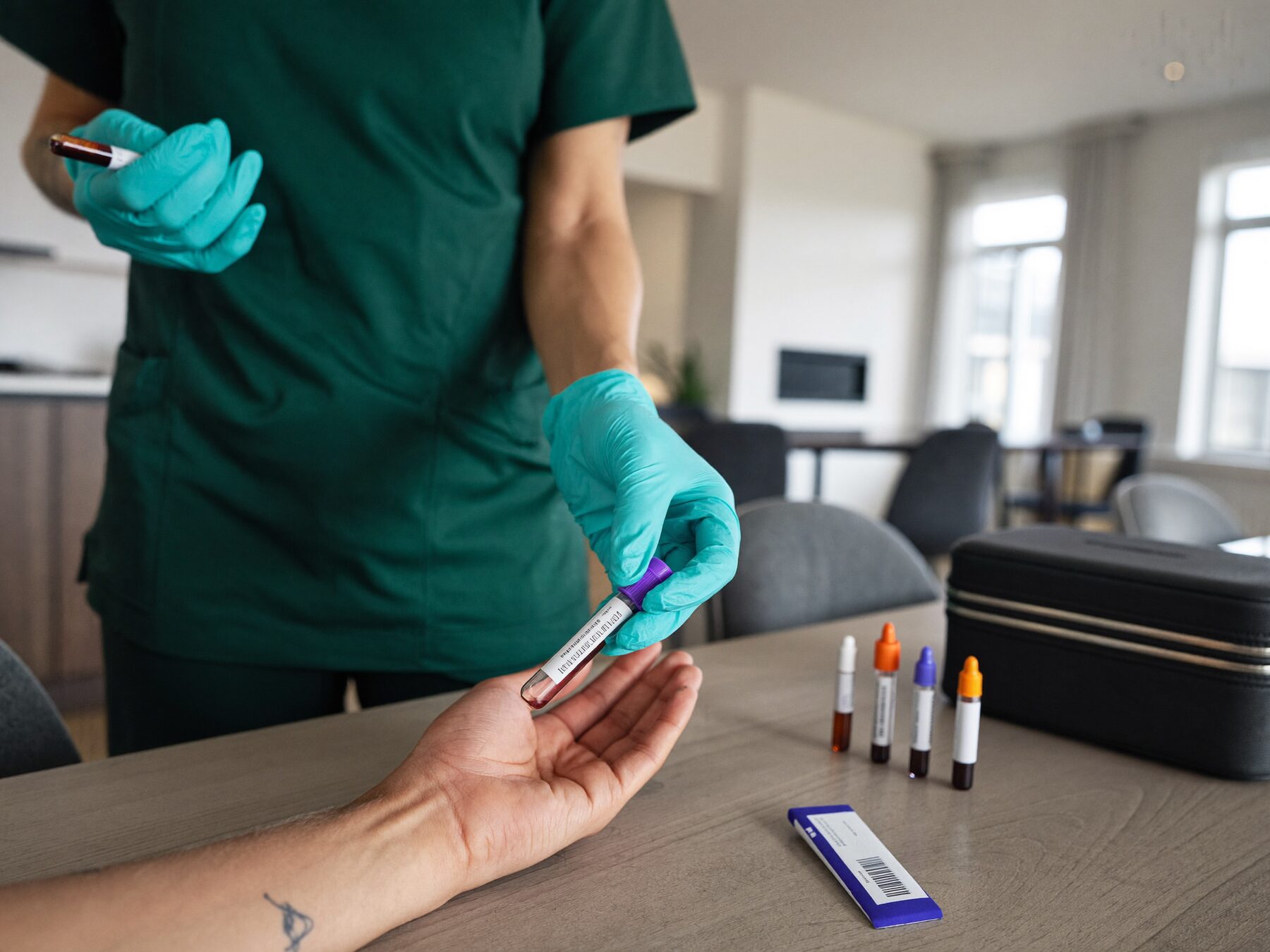

What the screen covers
Our home screen is a 32-test test covering the common and the easily missed infections, including HIV, syphilis, chlamydia, gonorrhoea, trichomoniasis, Mycoplasma genitalium and hepatitis B and C. It uses a blood sample, a urine sample and, where relevant, throat and rectal swabs.
Throat and rectal swabs matter. Chlamydia and gonorrhoea can be present only in the throat or rectum, and a urine test alone can miss them.
When to test
- Chlamydia and gonorrhoea: from about 2 weeks after sex
- HIV: a lab test detects most infections from about 4 to 6 weeks, with a repeat at 3 months if advised
- Syphilis: from about 4 to 6 weeks, with a repeat at 3 months if advised
- Hepatitis B: from about 6 weeks, with a repeat at 3 months if advised
- Hepatitis C: timed by your physician, usually from about 6 weeks, with later testing if advised
If it has been less than 72 hours since a possible HIV exposure, do not wait to test. Call about PEP first. If you are taking or have taken PEP, your physician sets your HIV test dates, because PEP changes the timing.
How it works
- Book by phone or WhatsApp and choose a time and place.
- A nurse collects your samples discreetly, in about 20 minutes.
- A physician calls you with your results in 24 to 48 hours, and arranges treatment at home if anything is positive.
This guide is general information, not a diagnosis. Every situation is different, so speak to a physician about yours. If you are in immediate danger, call 999.