 Hollis
Exposed in the last 72 hours? Call about PEP first
A test taken now cannot detect an infection from the last few days. If a possible exposure was less than 72 hours ago, PEP may prevent infection altogether. Call now and a physician will advise you, any hour, and can start PEP at your door within about 2 hours.
Which HIV test we use
Hollis uses a fourth-generation laboratory antigen/antibody test, which looks for both the HIV p24 antigen and antibodies, and detects most infections from about 4 to 6 weeks after exposure. For people who need an earlier answer, for example during a PEP course, an HIV RNA (PCR) test can detect the virus itself from about 10 to 14 days. Your physician chooses the test that fits your timing.
We do not use finger-prick rapid kits as the final word. They are useful for screening, but a laboratory test is what gives you a result you can rely on, and it is what a clinic would send anyway.
The window period
After an exposure there is a window period before an infection shows up on a test. Lab antigen/antibody tests detect most infections from about 4 to 6 weeks. Your physician may advise a repeat test at 3 months to be certain. If you are taking or have taken PEP, the timing is different and your physician sets your test dates.
Testing too early is the most common mistake. A negative result at one week tells you very little. If you are not sure when to test, book a call and the physician will give you the exact dates.
What your result means
A negative lab result taken after the window period for your last possible exposure means you did not get HIV from that exposure. If you took PEP or PrEP, your physician times the final test, usually 12 weeks after the exposure. A reactive result always needs a confirmatory test, and your physician will walk you through what happens next, calmly and in private. HIV today is a manageable condition with a normal life expectancy on treatment, and treatment is available in the UAE.
How it works
- Book by phone or WhatsApp. Same-day collection is usually available.
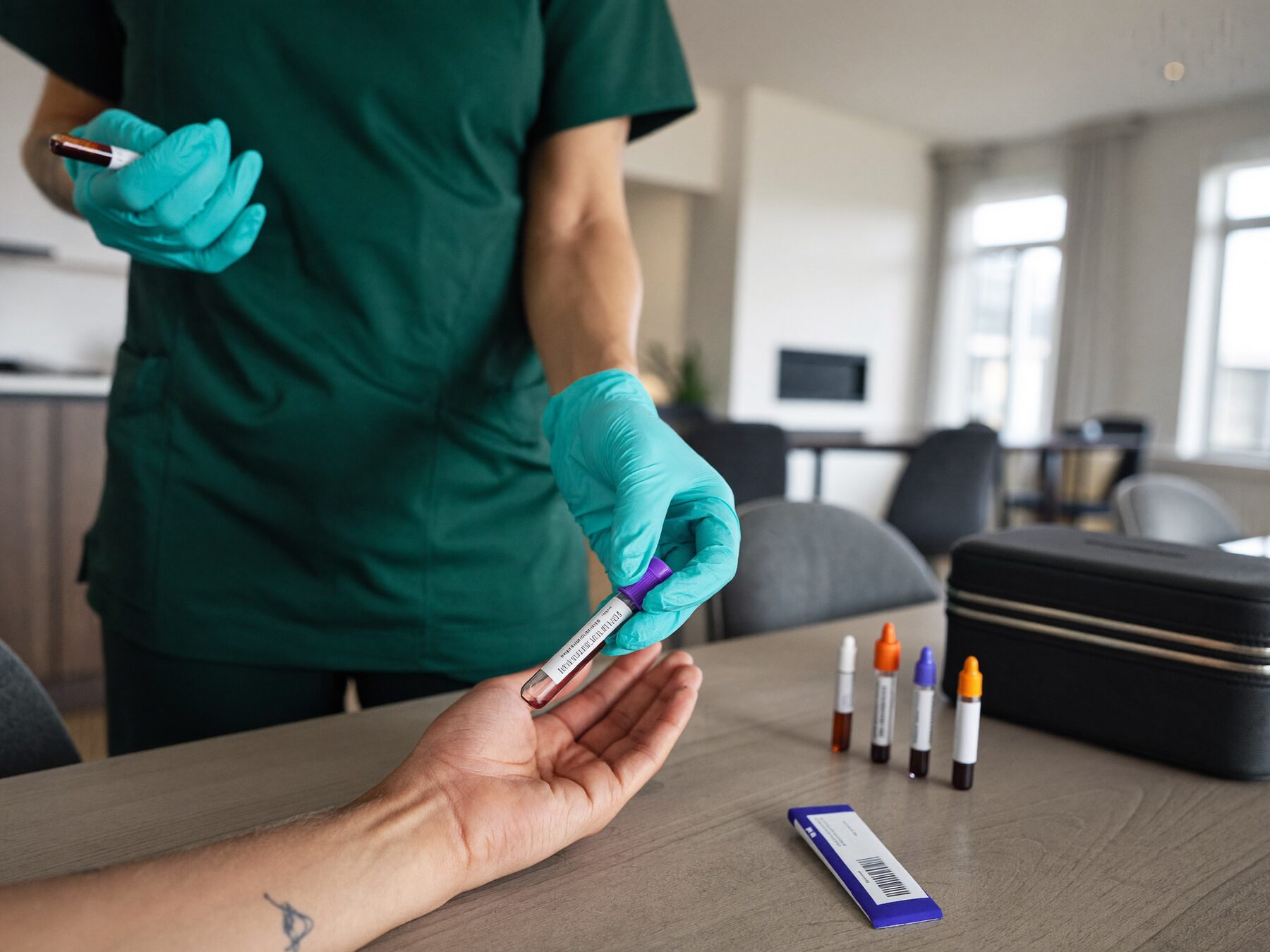
- A licensed nurse takes a blood sample at your home, hotel or office in about 15 minutes, in plain clothes.
- The sample goes to a DHA-licensed laboratory the same day.
- A physician calls you with your result in 24 to 48 hours and explains what it means for your timing.
Testing HIV alongside other infections
The exposure that worried you about HIV could also have passed on chlamydia, gonorrhoea, syphilis or hepatitis, which are far more common and often have no symptoms. HIV is included in every Hollis panel, so a single visit answers the whole question rather than one part of it. Your physician will suggest the right panel for what happened.
HIV testing for visitors and residents
Residents sometimes worry about a private test showing up on the UAE visa medical. The visa medical is a separate test done at a government centre, and a private test with Hollis is not part of that process. Visitors can be tested at their hotel and receive results securely after they have left Dubai if needed.
Privacy and the law
Your result is shared with you by your physician and handled under UAE health-data law. UAE law requires a confirmed positive HIV result to be reported to health authorities, and your physician will explain what that means before the test is taken. Asking for a test, or having a negative result, is not reported. Invoices read "Hollis Private Health, consultation".
This guide is general information, not a diagnosis. Every situation is different, so speak to a physician about yours. If you are in immediate danger, call 999.